Well that was an awesome semester. Thanks everyone! But don't mourn
its passing too soon. The internet is a treasure trove of amazing
medieval information. Here I'm just highlighting a few places you could
go in particular for podcasts (online audio files) about historical topics, including
medieval ones, by famous historians from all over the world.
For
example, did you know that the BBC History Magazine has a free online
section with audio interviews and brief talks? You can hear the latest
one, or browse the archive for whatever topic takes your fancy, from the
Crusades to WWII: http://www.historyextra.com/podcast-page
If you want a bit more detail, try the online lectures available [on almost any topic] from the Universities of Oxford (http://itunes.ox.ac.uk/) and Cambridge (http://www.cam.ac.uk/video/itunesu.html).
Did
you know that our own Clare Monagle is also a podcasting sensation?
Check her out on Radio National talking about the medieval concept of
'political theology': http://www.abc.net.au/radionational/programs/encounter/politics-and-god/3126076
And if you enjoyed the Robert Bartlett series Inside the Medieval Mind, linked earlier in semester, you could follow up by listening to this interview with him about making the series and what he wanted people to learn.
The end of semester doesn't have to be the end of medieval!
Naturally, there are also other Medieval and Renaissance units you can take here at Monash - just check out the Handbook!
In semester 2, look for ATS1317 (Renaissance Europe); ATS2603 (Age of
Crusades); and ATS2604 (Arthur: History and Myth). In summer 2012 there
will be the exciting travel unit ATS2612 (Renaissance in Florence). And
in 2013 look our for ATS3288 (Angels & Demons: Rome, the Papacy and
the World); ATS2572 (Crisis and renewal in the late Renaissance);
ATS2573 (Relics and legends); and ATS2579 (Witches and depravity).
See you then...
Kathleen
P.S.
Comments remain open, so those of you still writing your essays, please
feel free to post queries about citation, etc., below.
Showing posts with label Oxford. Show all posts
Showing posts with label Oxford. Show all posts
Monday, 21 May 2012

Tuesday, 20 March 2012
Town & Gown
Hi everyone,
In week 5 it's going to be another bumper discussion! Lectures will be introducing us to the rise of two important components of late medieval urban life: communes and universities. The twelfth and thirteenth centuries saw the foundation of some of the most famous universities in Europe, for example, these two, which in some ways still look as though one might bump into a medieval student around any given corner...
And in tutorials we will be discussing universities and education in more detail. In particular, we'll use the story of the two people pictured below as a juicy entrée into issues related to education at the time. Think about Abelard's Historia Calamitatum in light of the questions in the reading guide. What does his story tell us about intellectual and philosophical life and thought in twelfth-century France (apart from some pretty gory things about castration...)? If the extract whets your appetite, or you just want to know Heloise's side of the story (!), look for their letters which are published in various editions and available in the library; or look for the works of Monash's own Professor Constant Mews, who is a world expert on their correspondence.
In week 5 it's going to be another bumper discussion! Lectures will be introducing us to the rise of two important components of late medieval urban life: communes and universities. The twelfth and thirteenth centuries saw the foundation of some of the most famous universities in Europe, for example, these two, which in some ways still look as though one might bump into a medieval student around any given corner...
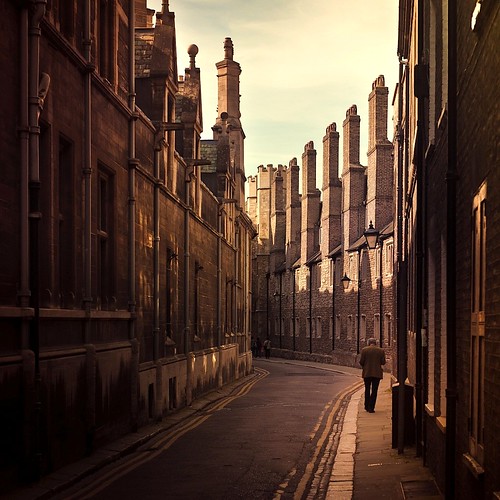 |
| Cambridge streetscape, by Andrew @ Cuba Gallery |
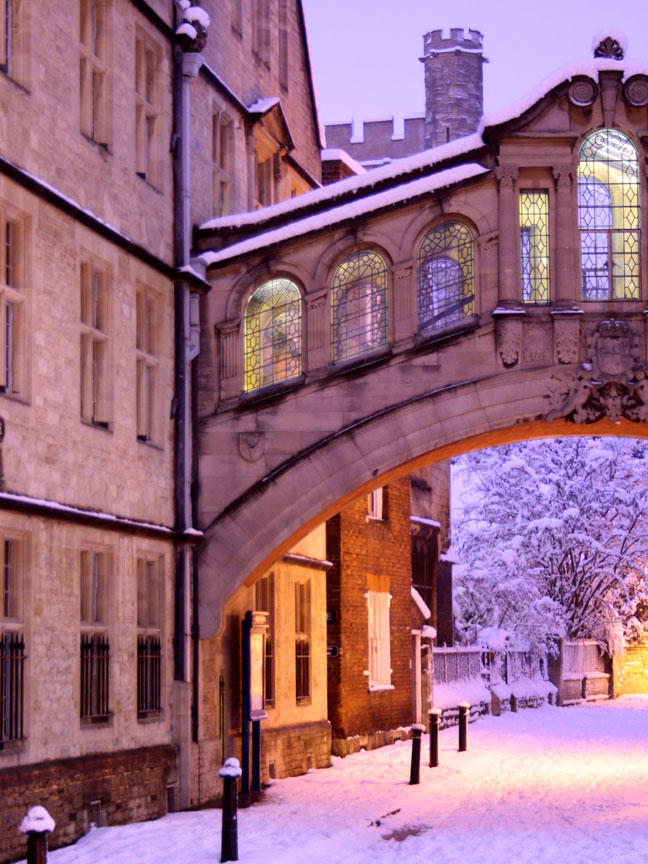 |
| Hertford Bridge, Oxford, by Jamie @ Daily Info |
And in tutorials we will be discussing universities and education in more detail. In particular, we'll use the story of the two people pictured below as a juicy entrée into issues related to education at the time. Think about Abelard's Historia Calamitatum in light of the questions in the reading guide. What does his story tell us about intellectual and philosophical life and thought in twelfth-century France (apart from some pretty gory things about castration...)? If the extract whets your appetite, or you just want to know Heloise's side of the story (!), look for their letters which are published in various editions and available in the library; or look for the works of Monash's own Professor Constant Mews, who is a world expert on their correspondence.
 |
| Abelard & Heloise |
Tuesday, 13 March 2012
It's the economy, stupid!*
Hi everyone,
In week 4 we're going to be considering some heavy hitting economic theories about how medieval Europe worked. In particular, we're going to be comparing the theories of these two historians:
Davis' work will form the basis of the Historical
Argument Exercise, due in week 5, so come prepared to think about and
discuss it in depth to assist in your preparation.
Remember, the first assessment task is also coming up next week. There will be an in-class test in the second lecture hour on Monday 19th March (unless you have already agreed an alternate arrangement with Clare and myself).
And just because I can't leave a whole blog post with no pretty pictures except photos of eminent old men, here's a completely gratuitous picture of Merton College, Oxford, where Davis worked for a time. It has, in my opinion, the most beautiful sounding bells in the world (or maybe they just make me nostalgic). You can hear them here.
* This is a quote from Bill Clinton, nothing personal!
In week 4 we're going to be considering some heavy hitting economic theories about how medieval Europe worked. In particular, we're going to be comparing the theories of these two historians:
 |
| R.H.C. Davis |
 |
| Henri Pirenne |
Remember, the first assessment task is also coming up next week. There will be an in-class test in the second lecture hour on Monday 19th March (unless you have already agreed an alternate arrangement with Clare and myself).
And just because I can't leave a whole blog post with no pretty pictures except photos of eminent old men, here's a completely gratuitous picture of Merton College, Oxford, where Davis worked for a time. It has, in my opinion, the most beautiful sounding bells in the world (or maybe they just make me nostalgic). You can hear them here.
 |
| Merton College, Oxford (Image by J. Gollner) |
Subscribe to:
Posts (Atom)